Honeywell’s Xenon 1900 series offers exceptional scanning performance, and comprehensive user manuals (available as PDF downloads) guide installation and operation;
These guides detail instructions, covering everything from initial setup to advanced programming, ensuring optimal use of this versatile scanner․
Overview of the Honeywell Xenon 1900 Series
The Honeywell Xenon 1900 series represents a family of high-performance area-imaging barcode scanners designed for a wide range of applications․ These scanners, detailed in their respective user manuals, excel in both 1D and 2D barcode reading, offering versatility for retail, healthcare, and industrial environments․
Available in corded and cordless configurations, the Xenon 1900 prioritizes speed and accuracy․ Honeywell provides comprehensive PDF documentation outlining features like its adaptive illumination and quick-scan capability․ The series is known for its durability and ease of integration, making it a popular choice for businesses seeking reliable scanning solutions․
Key Features and Benefits
The Honeywell Xenon 1900 boasts several key features, thoroughly explained in the user manual․ These include superior motion tolerance, allowing for quick and accurate scanning of moving items․ Its adaptive illumination optimizes scanning performance across various barcode types and conditions․
Benefits extend to reduced training time due to intuitive operation, and minimized downtime thanks to durable construction․ The manual details configuration options for diverse interfaces․ Furthermore, the scanner’s ability to read poor-quality or damaged barcodes enhances operational efficiency, as highlighted in Honeywell’s PDF documentation․
Getting Started with Your Scanner
Refer to the Honeywell 1900 manual for unboxing instructions and component identification․ The PDF guide ensures a smooth initial setup and familiarization process․
Unboxing and Initial Inspection
Carefully unpack your Honeywell Xenon 1900 scanner, referencing the user manual for a component checklist․ Verify the package includes the scanner itself, any accompanying cables (USB, etc․), and relevant documentation – typically a quick start guide and a comprehensive PDF manual․
Inspect all items for any signs of physical damage incurred during shipping․
Thoroughly examine the scanner for scratches, cracks, or loose parts․ If damage is present, immediately contact Honeywell support or your point of purchase․ Retain all packaging materials for potential returns or warranty claims, as detailed in the manual․
Scanner Components and Identification
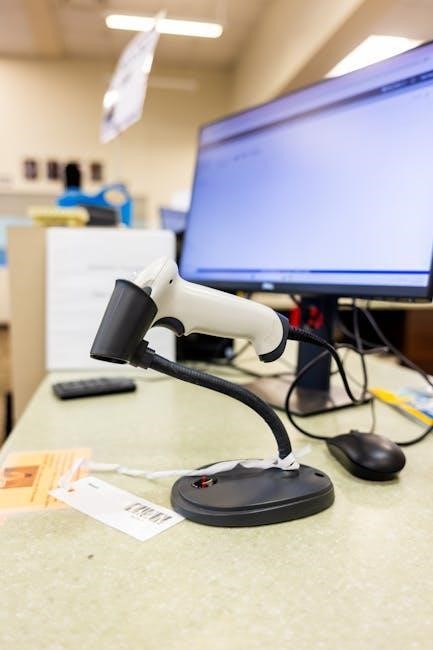
The Honeywell Xenon 1900 features a scan window, trigger button, and various interface ports (USB, etc․)․ Refer to your user manual’s diagrams for precise locations․ The manual identifies the status indicator LEDs, signaling power, scanning activity, and potential errors․
Understand the function of each component before operation․
The PDF manual details the cable connections and their purpose․ Familiarize yourself with the scanner’s physical layout to ensure proper handling and efficient troubleshooting, as outlined in the comprehensive instructions․

Installation and Configuration
Honeywell’s manual provides clear instructions for connecting the scanner to your host system, including potential driver installation (if needed) and basic settings configuration․
Connecting the Scanner to a Host System
Honeywell manuals detail various connection methods for the Xenon 1900, including USB and wireless options․ The user guide emphasizes verifying cable integrity and proper port functionality before initiating the connection process․
For USB connections, simply plug the scanner into an available port on your host system․ Wireless setup involves pairing the scanner with a compatible access point, following the step-by-step instructions within the PDF manual;
The manual also notes compatibility with PDAs and Honeywell Mobility Systems devices, often utilizing barcode-based configuration for streamlined integration․

Driver Installation (if required)
The Honeywell Xenon 1900 often functions as a plug-and-play device, minimizing the need for explicit driver installation․ However, the user manual (PDF format) advises checking the Honeywell website (www․honeywellaidc․com) for the latest drivers, particularly for specialized applications or older operating systems․
If a driver is necessary, the manual provides clear instructions for downloading and installing it; It stresses the importance of following the on-screen prompts and restarting the host system after installation․
Troubleshooting sections within the manual address common driver-related issues and offer potential solutions․
Configuring Basic Scanner Settings
The Honeywell Xenon 1900 user manual details how to adjust fundamental settings․ These adjustments, often made via barcode configuration codes, include symbology enablement, controlling good read feedback (visual/audible), and setting interface options․
The manual (available as a PDF) provides a comprehensive list of these codes, explaining each setting’s function․ Users can scan these codes directly into the scanner to modify its behavior․
Instructions cover setting scan aggressiveness and defining prefix/suffix characters for data transmission․

Understanding Scanner Operation
The Honeywell 1900 manual details optimal scanning techniques, supported 1D/2D symbologies, and effective pitch angles for reliable barcode reading performance․
Scanning Techniques for Optimal Performance
Honeywell’s manual emphasizes maintaining a consistent scan distance and angle for reliable reads․ The Xenon 1900 excels with a -45 to 45-degree pitch reading angle․
Ensure proper illumination; avoid glare or excessively dark environments․ Present barcodes squarely to the scanner, and utilize a smooth, sweeping motion if necessary․
Avoid obstructions and damaged barcodes; The user guide provides detailed illustrations and troubleshooting tips for challenging scans, maximizing efficiency and minimizing errors․
Supported Barcode Symbologies (1D & 2D)
The Honeywell Xenon 1900 is a versatile area-imaging scanner, supporting a wide range of both 1D and 2D barcode symbologies․ The user manual details comprehensive compatibility․
It reliably reads standard linear (1D) barcodes and complex 2D codes like QR, DataMatrix, and PDF417․ Configuration options, outlined in the PDF guide, allow enabling or disabling specific symbologies․
This flexibility ensures seamless integration across diverse applications, from retail to healthcare, accommodating various barcode formats for efficient data capture․
Reading Pitch Angles and Scan Distance
The Honeywell Xenon 1900 boasts an impressive reading range and wide pitch angles, detailed within the user manual․ It effectively scans barcodes from close proximity to extended distances, optimizing workflow efficiency․
The scanner supports a pitch reading angle of -45 to 45 degrees, allowing for comfortable scanning without precise alignment․ The PDF guide provides specific distance recommendations for various barcode densities․
Understanding these parameters, as outlined in the documentation, ensures optimal performance and minimizes scanning errors․
Programming and Customization
Honeywell Xenon 1900 scanners are programmable via barcode configuration codes, detailed in the manual․ Customize interface options and settings for tailored performance․
Using Barcode Configuration Codes
Barcode configuration codes offer a powerful method for customizing the Honeywell Xenon 1900․ The user manual provides a complete listing of these codes, enabling adjustments to symbology settings, interface parameters, and various operational behaviors․
Scanning these specific barcode patterns directly programs the scanner, eliminating the need for software or a direct connection to a computer․ This allows for quick and efficient configuration changes in the field․ Refer to the PDF manual for detailed instructions and code explanations․
Proper use of these codes unlocks the full potential of the scanner, tailoring it to specific application requirements and optimizing performance․
Interface Options and Configuration
The Honeywell Xenon 1900 supports multiple interface options, including USB, Serial, and Wireless, offering flexibility for diverse host systems․ The user manual details configuration procedures for each interface, ensuring seamless connectivity․
Configuration often involves selecting the appropriate interface type and setting communication parameters like baud rate and data bits․ Utilizing barcode configuration codes, as outlined in the PDF guide, simplifies this process․
Proper interface configuration is crucial for reliable data transmission and optimal scanner performance within your specific environment․

Troubleshooting Common Issues
The Honeywell manual provides solutions for issues like scanning failures and connectivity problems, including detailed error message explanations and guided troubleshooting steps․
Scanner Not Reading Barcodes
If the Honeywell Xenon 1900 isn’t reading barcodes, the user manual suggests verifying the barcode type is supported, checking for damage to the barcode itself, and ensuring proper scan distance․
Additionally, confirm the scanner lens is clean and free of obstructions․ Adjusting the scan angle, as detailed in the manual, can also improve readability․
Incorrect symbology configuration or low barcode print quality are common causes; the manual provides instructions for configuration adjustments and troubleshooting these issues․
Connectivity Problems
The Honeywell Xenon 1900 manual addresses connectivity issues by first recommending a check of the cable connection to both the scanner and the host system․ Ensure the cable is securely fastened at both ends․
If using a USB interface, try a different USB port․ The manual also details interface configuration options, including RS-232 and USB HID, and provides instructions for setting the correct communication parameters․
Driver issues, though often auto-configured, may require re-installation as outlined in the manual․
Error Messages and Their Meanings
The Honeywell Xenon 1900 manual dedicates a section to decoding error messages, crucial for troubleshooting․ Common messages indicate issues like “No Decode,” suggesting poor barcode quality or incorrect scan technique, as detailed in the instructions․
Other messages may relate to communication errors, prompting a review of cable connections and interface settings․ The manual provides a comprehensive list, explaining each code and offering suggested resolutions․
Referencing this section is vital for efficient problem-solving, avoiding unnecessary service calls․
Maintenance and Care
The Honeywell 1900 manual emphasizes regular cleaning with a soft cloth to maintain performance․ Preventative tips ensure longevity and reliable scanning operation․
Cleaning the Scanner
Regular cleaning is crucial for maintaining the Honeywell Xenon 1900’s optimal performance, as detailed in the user manual․ Use a soft, lint-free cloth, lightly dampened with water or isopropyl alcohol, to wipe the scanner’s exterior surfaces․
Avoid abrasive cleaners or solvents, as these can damage the plastic components or the scan window․ Pay particular attention to the scan window, ensuring it is free from dust, dirt, and smudges․
For stubborn residue, gently wipe the window with a circular motion․ Always ensure the scanner is disconnected from any power source before cleaning․ Proper care extends the scanner’s lifespan and ensures accurate readings․
Preventative Maintenance Tips
To ensure long-term reliability of your Honeywell Xenon 1900, follow these preventative maintenance tips outlined in the user manual․ Regularly inspect the cable for any signs of damage, such as fraying or cracking, and replace if necessary․
Avoid exposing the scanner to extreme temperatures, humidity, or direct sunlight․ Store the scanner in a clean, dry environment when not in use․
Periodically check and clean the scan window as described in the cleaning section․ Following these simple steps will minimize downtime and maintain peak scanning performance․
Technical Specifications
Honeywell provides detailed specifications in the manual, including physical characteristics like dimensions and weight, alongside performance data such as reading range and symbologies․
Physical Characteristics
Honeywell Xenon 1900 scanners, as detailed in the user manual, exhibit varied physical dimensions depending on the specific model (corded or cordless)․ Generally, they are designed for comfortable, ergonomic handling during prolonged use․
The manual specifies weight ranges, typically falling between 147 to 172 grams, contributing to a balanced feel; Robust construction ensures durability, withstanding typical drops and impacts․ The scanner’s housing material is designed for resistance to common cleaning agents, as outlined in the maintenance section of the PDF guide․
Performance Specifications
The Honeywell Xenon 1900, according to the user manual, boasts impressive scanning capabilities․ It supports a wide range of 1D and 2D barcode symbologies, ensuring versatility․ Pitch reading angles range from -45 to 45 degrees, enhancing scan success․
The PDF guide details scan distances, varying by barcode density․ Motion tolerance is high, enabling quick scanning of moving items․ The scanner utilizes an area-imaging sensor for reliable performance, even with damaged or poorly printed barcodes, as demonstrated in the manual’s testing procedures․

Resources and Support
Honeywell provides extensive support, including downloadable user manuals in PDF format, and a dedicated support website at www․honeywellaidc․com for assistance․
Downloading the User Manual (PDF)
Accessing the Honeywell Xenon 1900 barcode scanner’s user manual in PDF format is straightforward․ Numerous online resources host the document, ensuring easy access for all users․
A quick web search for “Honeywell Xenon 1900 user manual PDF” will yield direct download links․
These manuals comprehensively cover installation, operation, troubleshooting, and programming, offering detailed instructions․
Ensure you download the manual specific to your scanner’s configuration for accurate guidance․ The PDF format allows for convenient viewing and printing, facilitating easy reference during setup and maintenance․
Honeywell Support Website
Honeywell’s official support website, www․honeywellaidc․com, serves as a central hub for all 1900 series scanner resources․ Here, you’ll find a wealth of information, including downloadable user manuals in PDF format, frequently asked questions, and troubleshooting guides․
The website also offers access to software updates, configuration tools, and detailed technical specifications․
Users can submit support requests directly through the site, connecting with Honeywell’s expert technical team for personalized assistance․ This ensures comprehensive support throughout the scanner’s lifecycle․

Warranty Information
Honeywell provides coverage details for the Xenon 1900, outlined in the product documentation․ Contact Honeywell directly for warranty claims and support․
Coverage Details
Honeywell International Inc․ reserves the right to modify specifications and information contained within documentation, including warranty details for the Xenon 1900 series․ The standard warranty typically covers defects in materials and workmanship for a specified period from the date of purchase․
This coverage doesn’t extend to damage resulting from misuse, accidents, or unauthorized modifications․ Refer to the complete warranty statement included with your scanner or downloadable from the Honeywell support website for precise terms, conditions, and limitations․ Proper registration may be required to validate your warranty․
Contacting Honeywell for Warranty Claims
To initiate a warranty claim for your Honeywell Xenon 1900 barcode scanner, first visit the official Honeywell support website (www․honeywellaidc․com) for detailed instructions and claim forms․ You may need your proof of purchase and scanner serial number․
Alternatively, contact Honeywell’s customer service directly via phone or email, details of which are available on their website․ Ensure you clearly describe the issue and provide all requested documentation to expedite the process․ Retain all shipping documentation for returned units․