
Converting a 4L60E to manual shift offers a classic driving experience, bypassing modern electronic controls for a direct mechanical connection.
Numerous resources, like Very Good Garage and B&M, detail the process, from initial disassembly to final calibration. This conversion involves replacing internal components and adjusting the shift linkage for optimal performance.
Overview of the 4L60E Transmission
The 4L60E is a four-speed automatic transmission widely used in General Motors vehicles from the 1990s through the early 2000s. Known for its durability and relatively compact size, it’s a popular choice for swaps and modifications. However, its electronic control system can present challenges. Converting to a manual shift eliminates the reliance on the Transmission Control Module (TCM) and associated wiring.
Internally, the 4L60E utilizes a planetary gearset and hydraulic controls. Modifications for manual operation primarily focus on the valve body, replacing electronic solenoids with mechanical linkages. Resources like Sonnax and TCI Automotive offer components to enhance its reliability. Understanding its construction is crucial for a successful conversion, as detailed in various online forums and installation guides.
Why Choose a Manual Shift?
Opting for a manual shift conversion on a 4L60E offers several compelling advantages. Many enthusiasts prefer the direct control and engagement of a mechanical linkage over electronic shifting. This conversion simplifies the drivetrain, removing potentially problematic wiring and the TCM, enhancing reliability. It’s a popular choice for projects like the 1949 Chevy panel truck build, where minimizing complexity is key.
Furthermore, a manual shift can unlock performance potential, allowing for more precise gear selection. While modern GM transmissions can be complex, a manual setup provides a more straightforward approach. Resources like Shiftworks demonstrate how to connect column shifters effectively. Ultimately, it’s about tailoring the driving experience to personal preference and project goals.
Planning Your 4L60E Manual Shift Conversion
Successful conversion requires careful planning, assessing compatibility, and compiling a comprehensive parts list, including a shift kit and manual valve body for optimal results.
Assessing Compatibility

Before embarking on a 4L60E manual shift conversion, thoroughly evaluate your vehicle and transmission. Determine the existing transmission’s condition; a rebuild might be necessary alongside the conversion. Consider the engine’s power output, as this influences the required shift kit and valve body specifications.
Compatibility extends to the column shifter; a universal linkage, like those from Shiftworks, may be needed for proper connection. Ensure the chosen shift kit (TransGo, B&M) is designed for your specific 4L60E variant. Finally, assess your mechanical skills and access to tools – this conversion demands precision and patience.
Required Parts List

A successful 4L60E manual shift conversion necessitates a comprehensive parts list. Crucially, you’ll need a manual valve body to replace the electronic one. A shift kit – options include TransGo HD2 or B&M – is essential for firm, precise shifts. Don’t forget shift linkage components, potentially including a universal rod and adjustable spherical bearings.
Additional items include new check balls, springs, and gaskets for the transmission rebuild. Depending on the kit, you may require specific piston codes. Finally, consider a transmission control module (TCM) calibration tool for optimal performance, and fluids for reassembly.
Shift Kit Options (TransGo, B&M)
When selecting a shift kit for your 4L60E manual conversion, TransGo and B&M are prominent choices. TransGo’s HD2 kit, as demonstrated by Very Good Garage, focuses on improving shift firmness and addressing common issues. B&M kits, detailed in their installation guides, offer a more performance-oriented experience.
Both brands require internal transmission disassembly for installation, involving spring and check ball replacements, and fluid passage modifications. The choice depends on your desired driving style; TransGo leans towards reliability, while B&M caters to more aggressive shifting. Ensure the kit is compatible with your specific 4L60E model year.
Manual Valve Body
The manual valve body is central to a 4L60E manual shift conversion, replacing the electronically controlled version. This component dictates gear selection based on direct mechanical input from the shift linkage. Sourcing a dedicated manual valve body is crucial, as modifying an existing electronic one is complex and often unreliable.
Installation requires careful attention to detail, ensuring proper alignment and sealing to prevent fluid leaks. Adjustments are necessary to achieve smooth and precise gear engagement. Resources emphasize the importance of thoroughly cleaning the valve body before installation. Proper function relies on correct spring and check ball placement within the valve body itself.
Shift Linkage Components
Essential shift linkage components bridge the gap between the driver’s input and the manual valve body. This system typically includes a shift lever, linkage rods, and potentially a universal joint for angled connections. Shiftworks offers Kugel Komponents universal rods with adjustable spherical bearings for precise alignment.
Correct linkage geometry is vital for accurate gear selection; improper adjustment leads to missed shifts or difficulty engaging gears. Components must be robust enough to withstand the forces applied during shifting. Careful attention to detail during installation and adjustment is paramount. Ensuring smooth, positive engagement requires a well-designed and properly installed linkage system.

Installation Process: Step-by-Step Guide
The conversion process demands careful transmission removal, meticulous disassembly, shift kit installation, valve body adjustments, and precise shift linkage setup for optimal results.
Transmission Removal
Begin by safely supporting the vehicle with jack stands. Disconnect the driveshaft, ensuring you mark the orientation for reinstallation. Detach all electrical connectors and cooler lines connected to the 4L60E transmission. Support the transmission with a transmission jack, then remove the crossmember.
Carefully lower the transmission, ensuring it clears all surrounding components. This step requires patience and attention to detail, as you’ll need access for later reassembly. Remember to drain the transmission fluid before removal to minimize mess. Proper support is crucial to prevent damage during the removal process, as highlighted in various installation guides.
Disassembly and Inspection
Once removed, thoroughly clean the 4L60E transmission exterior. Begin disassembly by removing the tailshaft housing, then carefully separate the pump from the transmission case. Inspect all hard parts – gears, shafts, and clutches – for wear, damage, or broken teeth. Pay close attention to the valve body, checking for worn valves and passages.
Examine the seals and gaskets for deterioration. Document the condition of each component; this aids in determining necessary replacements. Resources like B&M’s installation guides emphasize meticulous inspection. Replacing worn parts during this stage prevents future issues and ensures a reliable manual shift conversion.
Installing the Shift Kit
With the transmission disassembled, installing the shift kit – TransGo or B&M – begins. Follow the kit’s specific instructions meticulously. Typically, this involves removing and replacing check balls and springs within the valve body. The process often requires modifying fluid passages, as highlighted in videos from Very Good Garage, to alter shift points and firmness.
Ensure all surfaces are clean before installing new components. A TransGo HD2 kit, for example, requires careful attention to piston codes. Proper installation is crucial; incorrect placement can lead to poor shifting or transmission damage. Double-check each step against the provided diagrams and instructions.
Modifying Fluid Passages
A critical step in shift kit installation involves modifying fluid passages within the 4L60E valve body. This alters hydraulic pressure, directly impacting shift points and firmness. Many kits, like the TransGo HD2, require specific drill sizes and locations, detailed in their instructions. These modifications often involve enlarging or adding passages to redirect fluid flow.
Carefully follow the kit’s diagrams to ensure accuracy. Incorrect modifications can lead to harsh shifts or transmission failure. Use appropriate tools and deburr all drilled holes to prevent debris from contaminating the hydraulic system. This process, as demonstrated in several online tutorials, is fundamental to achieving the desired shift characteristics.
Replacing Check Balls and Springs
Essential to a shift kit’s function is replacing the factory check balls and springs within the 4L60E valve body. These components regulate fluid flow, influencing shift timing and pressure. Shift kits, such as those from B&M and TransGo, provide a selection of check balls and springs with varying weights and rates.
The kit’s instructions will specify which components to replace and with what. Installing heavier springs increases hydraulic pressure, resulting in firmer shifts. New check balls ensure a tight seal, preventing fluid leakage and maintaining consistent performance. Proper installation, as shown in installation videos, is crucial for optimal results and transmission longevity.
Valve Body Installation and Adjustment
After modifying fluid passages and replacing check balls and springs, carefully reinstall the valve body onto the 4L60E transmission. Ensure a proper gasket seal to prevent leaks. Initial adjustment is critical; follow the shift kit’s instructions meticulously, as variations exist between TransGo and B&M kits.
Pay close attention to the manual valve body’s positioning and secure it firmly. Preliminary testing involves verifying proper shift engagement in each gear. Fine-tuning may be necessary to achieve smooth, precise shifts. Resources like online forums offer guidance on common adjustment issues and troubleshooting tips for optimal performance.
Shift Linkage Setup
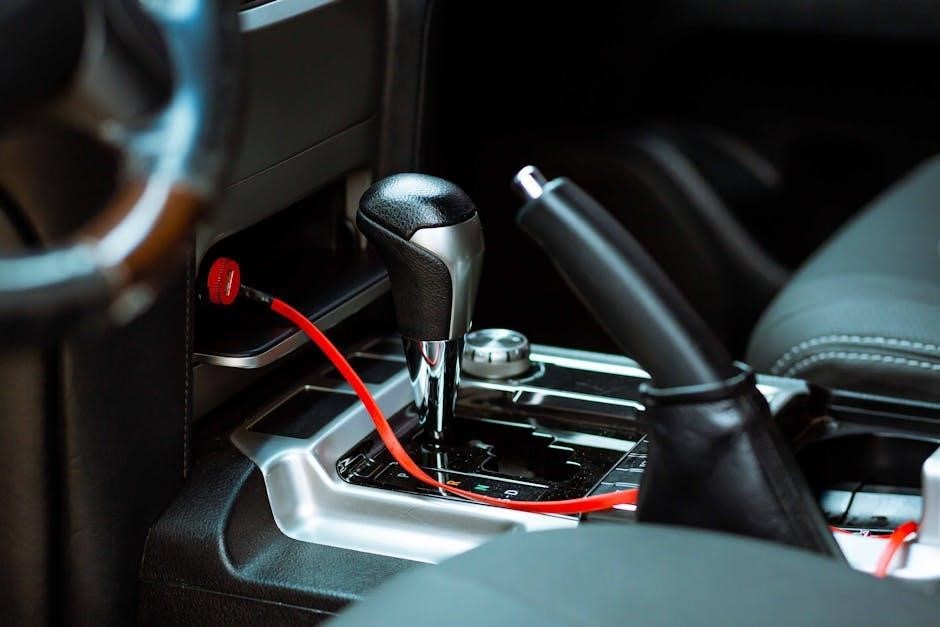
Connecting the column shifter requires a universal rod, like those from Shiftworks, with adjustable spherical bearings for precise engagement and smooth gear transitions.
Connecting the Column Shifter
Establishing a solid connection between the existing column shifter and the newly converted 4L60E manual valve body is crucial for a functional and enjoyable driving experience. Resources like Shiftworks recommend utilizing a Kugel Komponents universal rod, offering adaptability for various vehicle configurations.
This rod features a stainless steel shaft, ensuring durability and resistance to wear. Adjustable spherical bearings on both ends allow for fine-tuning, compensating for any alignment discrepancies and guaranteeing precise gear selection. Careful measurement and adjustment are paramount to avoid binding or sloppy engagement. Proper alignment ensures smooth, confident shifts, enhancing the overall driving feel of your converted transmission.
Adjusting Shift Linkage for Precise Engagement
Achieving precise gear engagement after connecting the column shifter requires meticulous adjustment of the shift linkage. The universal rod, as recommended by Shiftworks, provides adjustability, but demands careful attention to detail. Begin by verifying full range of motion through all gears, ensuring no binding occurs during the shift process.
Fine-tune the linkage until each gear selection feels firm and positive. Sloppy engagement can lead to missed shifts or damage to the transmission. Double-check alignment at both the column shifter and the valve body, making incremental adjustments as needed. A properly adjusted linkage is vital for a smooth, reliable, and enjoyable manual shift experience.

Tuning and Calibration
Calibration of the TCM is crucial for manual shift operation, requiring understanding of transmission control modules to ensure proper functionality and performance.
Understanding Transmission Control Modules (TCM)

The TCM, in modern GM transmissions like the 4L60E, manages shift points, torque converter clutch engagement, and overall transmission behavior. However, a manual shift conversion necessitates a different approach. While some sources mention bypassing the TCM entirely, others suggest reprogramming it to eliminate electronic control and allow for purely mechanical shifting.
Understanding the TCM’s role is vital; it interprets signals from various sensors. When converting to manual, these signals become irrelevant. Therefore, the TCM must be either disabled or recalibrated. Some aftermarket solutions offer standalone controllers designed specifically for manual transmissions, providing a clean and efficient alternative to modifying the factory TCM; Proper TCM management is key to a successful conversion.
Calibration for Manual Shift Operation
Calibrating the 4L60E for manual shift operation involves removing the electronic control of gear selection. This often means disabling features managed by the TCM, such as torque converter lockup and adaptive learning. If retaining the TCM, custom tuning is crucial to prevent error codes and ensure smooth operation.
The goal is to create a system where the driver’s mechanical inputs directly control gear changes. This requires adjusting parameters within the TCM, or utilizing a standalone controller, to ignore sensor data related to automatic shifting. Proper calibration ensures the transmission responds predictably to the new manual linkage, delivering a reliable and enjoyable driving experience. Careful attention to detail is paramount during this stage.
Troubleshooting Common Issues
Common problems include shift linkage misalignment and valve body malfunctions, requiring careful inspection and adjustment. Addressing these issues ensures smooth, precise gear changes after conversion.
Shift Linkage Problems
Shift linkage issues are frequently encountered post-conversion, manifesting as imprecise gear selection or difficulty engaging certain gears. A primary culprit is improper adjustment of the connecting rod between the column shifter and the transmission. Resources like Shiftworks highlight the importance of a universal rod with adjustable spherical bearings for fine-tuning.
Symptoms include a loose or sloppy feel during shifts, or the inability to fully engage a gear. Inspect the linkage for binding or wear, and ensure all connections are secure. Correcting these problems often involves lengthening or shortening the linkage rod, and verifying proper alignment throughout the entire range of motion. Careful calibration is key to a satisfying manual driving experience.
Valve Body Malfunctions
Valve body malfunctions after a 4L60E manual shift conversion often stem from incorrect installation or modifications during the shift kit installation process. TransGo HD2 kits, for example, require precise alterations to fluid passages and the replacement of check balls and springs. Improperly seated components can disrupt fluid flow, leading to erratic shifting or complete failure to engage gears.
Common issues include sticking valves, caused by debris or incorrect spring pressures. A thorough inspection during disassembly is crucial, as is meticulous cleaning before reassembly. If problems persist, consider revisiting the shift kit instructions and verifying all modifications were performed accurately. Sonnax and TCI Automotive offer resources for diagnosing and resolving valve body issues.

Resources and Further Information
Online forums and communities, alongside technical documentation from Sonnax, TCI, and TransGo, provide invaluable support for your 4L60E manual shift conversion journey.
Online Forums and Communities
Engaging with online communities dedicated to 4L60E transmissions and manual swaps is incredibly beneficial. These platforms offer a wealth of knowledge from experienced builders who have tackled similar conversions. Forums become a central hub for troubleshooting common issues, like shift linkage problems or valve body malfunctions, providing practical solutions and shared experiences.

Dedicated forums allow you to ask specific questions about your build, receive feedback on your parts list, and learn from others’ mistakes. Many members share detailed build threads, complete with photos and videos, offering step-by-step guidance. These communities often discuss shift kit options (TransGo, B&M) and the nuances of TCM calibration for manual operation, accelerating your learning curve and ensuring a smoother conversion process.
Technical Documentation and Manuals
Accessing comprehensive technical documentation is crucial for a successful 4L60E manual shift conversion. Detailed manuals from manufacturers like TransGo and B&M provide specific instructions for installing their respective shift kits, including diagrams of fluid passages and component layouts. These resources outline the correct procedures for modifying internal parts, replacing check balls and springs, and adjusting valve body settings.
Beyond manufacturer guides, seek out service manuals for the 4L60E transmission itself. These manuals offer in-depth information on disassembly, inspection, and reassembly procedures. Understanding the transmission’s internal workings is vital for identifying compatibility issues and ensuring proper function after the conversion. Supplement these with online resources detailing TCM calibration and shift linkage setup for precise engagement.