
Table Saw Roller Guide: A Comprehensive Guide (Updated 12/09/2025)
Today, December 9th, 2025, this guide explores table saw roller guides, precision tools enhancing control and safety,
particularly reducing kickback risks with angled rollers and robust designs like Harvey Woodworking and Jessem.
Table saw roller guides represent a significant advancement in woodworking safety and precision. These systems, gaining popularity among woodworkers, address the critical issue of kickback – a dangerous occurrence where the workpiece is violently thrown back towards the operator.
Unlike traditional methods, roller guides utilize a series of precisely angled rollers to maintain consistent contact with the workpiece, steering it along a controlled path.
Experienced users highlight the robustness and longevity of brands like Harvey Woodworking and Jessem, noting their superior performance compared to simpler alternatives. Understanding these guides is crucial for maximizing both safety and accuracy in your workshop.
What is a Table Saw Roller Guide?
A table saw roller guide is a precision-engineered system designed to support and control wood as it’s fed through the saw blade. It consists of multiple rollers, often with a slight angle (like Jessem wheels), strategically positioned to maintain consistent pressure against the workpiece.
These guides aren’t simply supports; they actively steer the wood, preventing it from drifting or twisting, and crucially, minimizing the risk of dangerous kickback.
Systems range from universal guides, such as the Harvey Woodworking Compass RG-1/RG-2, to integrated outfeed table setups, all aiming for enhanced control.
The Primary Function: Reducing Kickback
The core purpose of a table saw roller guide is to dramatically reduce the incidence of kickback – a dangerous situation where the workpiece is violently thrown back towards the operator.
Roller guides achieve this by maintaining consistent downward and inward pressure, keeping the wood firmly against the fence and table.
The angled rollers, like those from Jessem, are particularly effective, actively countering forces that could lead to binding and subsequent kickback. Proper alignment is crucial; misaligned rollers can increase risk.
Benefits of Using a Table Saw Roller Guide

Table saw roller guides offer substantial benefits beyond kickback reduction. Users report enhanced control and accuracy, leading to cleaner, more precise cuts, especially on larger workpieces.
The robust construction of systems like Harvey Woodworking’s Compass RG-1/RG-2 inspires confidence and suggests long-term durability.
Furthermore, they provide a smoother feed rate, minimizing operator fatigue and improving overall workflow efficiency. A waxed surface can be a staging area, but rollers offer superior support.
Enhanced Safety Features
Table saw roller guides significantly bolster workshop safety by actively mitigating kickback, a primary cause of table saw injuries.
The angled roller design, exemplified by Jessem wheels, maintains consistent pressure against the fence, steering the workpiece safely.
Proper alignment is crucial; misaligned rollers can increase risk. Regular inspection prevents jamming, a dangerous scenario. These guides complement, not replace, existing anti-kickback features.
Improved Accuracy and Control
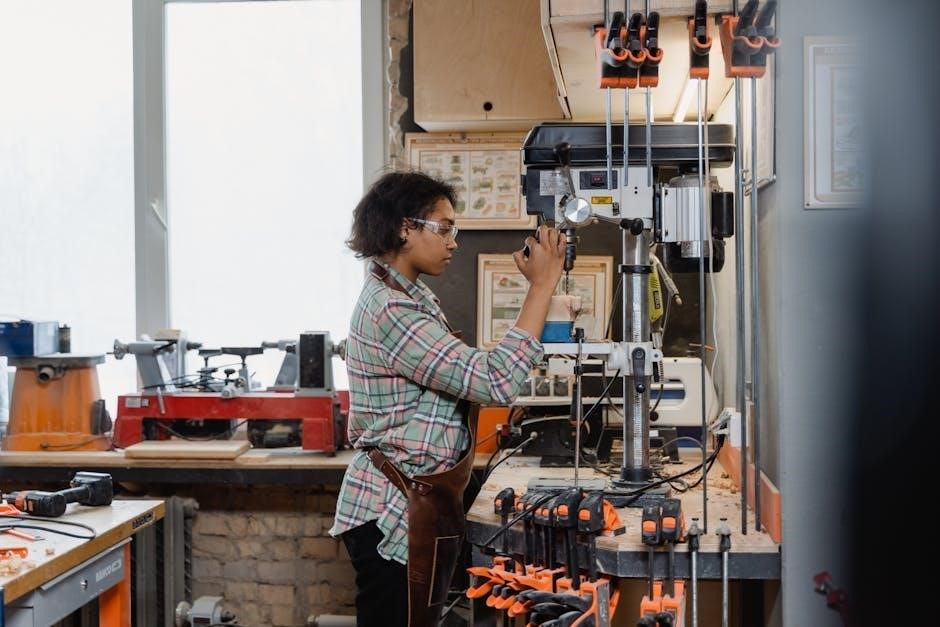
Table saw roller guides deliver superior accuracy by providing consistent, even support throughout the cutting process.
This minimizes workpiece deflection, resulting in cleaner, more precise cuts, especially on larger boards.
Positioning guides strategically, as suggested in manuals—close to the saw’s front and back—optimizes control.
The robust build quality, like that of Harvey Woodworking, ensures stability and predictable performance, enhancing overall control.
Types of Table Saw Roller Guides
Table saw roller guides broadly fall into three categories: outfeed table roller systems, universal guides, and in-feed guides.
Outfeed systems provide support after the cut, while universal guides, such as the Harvey Woodworking Compass RG-1/RG-2, offer adaptable support.
In-feed guides assist before the blade. Some users modify existing systems or build basic outfeed tables, though caution regarding alignment is crucial for safety.
Outfeed Table Roller Systems
Outfeed table roller systems integrate rollers directly into the table saw’s outfeed surface, providing continuous support for longer workpieces.
Users report loving these systems, finding them highly effective, though some express concerns about potential dangers if not properly aligned.
A flat, waxed surface can sometimes suffice as an alternative, but proper roller alignment is vital to prevent workpieces from jamming against the blade.
Universal Roller Guides (e.g., Harvey Woodworking Compass RG-1/RG-2)
Harvey Woodworking’s Compass RG-1/RG-2 are highly regarded universal roller guides, praised for their robust construction and longevity.
Users consistently highlight their “beefy” build quality and impressive durability, making them a popular choice for serious woodworkers.
These guides are often utilized on router tables as well, demonstrating their versatility, and are considered a worthwhile investment despite their complexity.
In-Feed Roller Guides
In-feed roller guides, positioned before the blade, work in tandem with outfeed systems to provide continuous support.
While less commonly discussed than outfeed options, they contribute significantly to maintaining consistent pressure and preventing workpiece movement during the initial cut;
However, some users express caution, noting potential dangers if rollers aren’t perfectly aligned with the lumber’s path, risking jams against the blade.
Key Components of a Roller Guide System

A robust roller guide system comprises several key elements. Roller material and durability are paramount, with users praising the longevity of brands like Harvey Woodworking and Jessem.
Roller design and angle, such as the slight angle found in Jessem wheels, are crucial for secure workpiece control.
Finally, a precise guide rail system ensures smooth, consistent movement and proper alignment with the blade, vital for safety and accuracy.
Roller Material and Durability
Selecting durable roller materials is critical for a long-lasting system. User feedback consistently highlights the robust build quality of guides from Harvey Woodworking, noting their impressive longevity.
These guides are described as “beefy” and “insanely robust,” suggesting high-quality construction.
Durability ensures the rollers withstand frequent use and maintain consistent performance, contributing to both safety and precision during woodworking operations.
Roller Design and Angle (Jessem Wheels)
Jessem wheels represent a notable advancement in roller design, featuring a slight angle intended to firmly hold the workpiece against the fence.
This angled approach is considered superior to older systems like “board buddies,” providing enhanced control and minimizing the risk of kickback.
The design actively steers the wood, improving accuracy and safety, while the robust construction ensures durability during demanding woodworking tasks.
Guide Rail System

Guide rail systems are integral to effective roller guide operation, providing a stable and precise path for the workpiece.
These systems, often incorporating Jessem wheels, maintain consistent pressure and alignment, crucial for preventing unwanted movement during cuts.
Proper alignment is paramount; misaligned rollers can jam the board against the blade, creating a dangerous situation. A well-designed rail ensures smooth, controlled material flow.
Installation and Setup
Proper installation is critical for maximizing a table saw roller guide’s benefits.
Alignment with the blade must be precise to avoid binding and ensure accurate cuts.
Positioning depends on workpiece size; guides should be placed close to the front and back of the saw when feasible, as recommended in manuals.
Carefully adjusting roller pressure is also essential for optimal performance and safety, preventing jamming while maintaining control.
Proper Alignment with the Blade
Precise alignment of the roller guide with the saw blade is paramount for safe and accurate operation.
Misalignment can cause the workpiece to bind, potentially leading to dangerous kickback situations.
Ensure the rollers are parallel to the blade and positioned to steer the wood consistently towards the fence.
If rollers are out of line with the lumber’s path, they can push the board into the blade, creating a very unsafe scenario.
Positioning for Different Workpiece Sizes
Optimal positioning of the roller guide depends heavily on the workpiece dimensions.
For smaller pieces, position the guides closer to the blade, providing maximum support and control.
Larger workpieces benefit from guides placed further away, offering stability throughout the cut.
As suggested in manuals, position guides close to the front and back of the saw when possible, adapting based on the specific size and shape of the wood being processed.
Adjusting Roller Pressure
Proper roller pressure is crucial for effective workpiece control without causing binding or hindering feed rate.
Too little pressure allows movement and potential kickback, while excessive pressure can strain the motor and lead to inconsistent cuts.
Fine-tune the pressure to ensure firm contact with the wood, steering it towards the fence, but allowing smooth forward progression. Regularly check and readjust as needed for varying wood densities.
Comparing Roller Guides to Featherboards
Roller guides and featherboards both aim to control workpiece movement, but differ in approach.
Featherboards rely on friction, while rollers provide a positive, low-friction steering action.
Some users question if roller guides are over-engineered compared to simpler featherboards, noting increased complexity and potential failure points. However, robust designs like Harvey Woodworking offer superior longevity and control, especially for demanding cuts.
Complexity vs. Simplicity
Roller guides introduce complexity compared to featherboards’ straightforward design. This complexity stems from multiple rollers, rail systems, and adjustment mechanisms.
While featherboards are simple to install and use, their effectiveness relies heavily on proper setup and workpiece contact.
The added complexity of roller guides can present more potential failure points, but also delivers enhanced precision and consistent control, particularly with larger workpieces.
Potential Failure Points
Roller guides, despite robust construction, aren’t immune to issues. Misalignment is a key concern; rollers out of line can increase kickback risk by jamming the workpiece against the blade.
Guide rail movement or loosening can compromise accuracy and safety.
Roller jamming, potentially caused by debris or improper adjustment, is another possibility. The increased complexity, as noted, inherently introduces more components susceptible to wear or malfunction.

Advantages of Roller Guides over Featherboards
Roller guides offer superior workpiece control compared to featherboards, particularly with angled rollers like Jessem’s, providing a firmer, more consistent hold against the fence.
While featherboards rely on friction, rollers actively steer the wood, minimizing kickback potential.
Users report roller guides are far superior, offering robustness and longevity, even if some perceive them as “over-engineered” compared to simpler featherboard setups.

Safety Considerations
Proper alignment is paramount when using table saw roller guides; misalignment can cause jamming against the blade, creating a very unsafe situation.
Regularly inspect the system for any movement in the guide rail, ensuring consistent support.
Anti-kickback features are crucial, and users caution against poorly designed fold-out rollers. Maintaining a waxed, flat surface can also serve as a safe staging area.
Avoiding Misalignment and Jamming
Critical to safe operation is ensuring rollers are perfectly in line with the lumber’s path, preventing them from pushing the board into the blade.
Regularly check for guide rail movement, as instability contributes to misalignment.
Inspect for obstructions and debris. A smooth, consistent surface is vital; a waxed table can aid material flow, reducing friction and potential jams.
Importance of Anti-Kickback Features
Kickback is a primary hazard mitigated by roller guides, steering workpieces towards the fence.
Utilizing angled rollers, like those from Jessem, firmly hold material against the fence, enhancing control and minimizing the risk of dangerous kickback events.
Combined with proper alignment and regular inspection, these features are crucial for a safe and productive woodworking experience.
Regular Inspection and Maintenance
Consistent performance relies on diligent upkeep. Regularly inspect roller guides for misalignment, jamming, or damage, ensuring smooth operation.
Check roller pressure and guide rail movement, addressing any inconsistencies promptly.
Maintaining a clean, waxed surface alongside the rollers prevents binding. Proactive maintenance extends the lifespan of robust systems like Harvey Woodworking, maximizing safety and precision.
Popular Brands and Models
Harvey Woodworking stands out with its robust Compass RG-1/RG-2 universal roller guides, praised for longevity and build quality.
Jessem Tool Company offers innovative solutions, including angled wheels enhancing grip and anti-kickback performance, often favored over older systems like Board Buddies.
While other manufacturers exist, these two consistently receive positive user feedback regarding durability and effectiveness in controlling workpiece movement.
Harvey Woodworking
Harvey Woodworking’s Compass RG-1/RG-2 universal roller guides are highly regarded within the woodworking community.
Users consistently highlight their exceptional robustness and perceived longevity, describing them as “beefy” and “insanely robust.”
These guides are frequently utilized on router tables as well as table saws, offering reliable support and control. Despite the robust build, some question if it’s over-engineered.
Jessem Tool Company
Jessem Tool Company offers wheels designed for use on rails, providing a secure hold and minimizing kickback risks.
Woodworkers favor Jessem wheels over alternatives like “Board Buddies,” citing the slight angle of the rollers as superior for maintaining consistent workpiece-to-fence contact.
This design effectively steers the wood, enhancing both safety and precision during cutting operations, and is a popular choice for many users.
Other Notable Manufacturers
While Harvey Woodworking and Jessem Tool Company are prominent, several other manufacturers contribute to the table saw roller guide market.
User discussions highlight a diverse range of options, though specific brands beyond these two receive less detailed mention in readily available online feedback.
Exploring various manufacturers is crucial for finding a system tailored to individual needs and budgets, ensuring optimal performance and safety.
Troubleshooting Common Issues
Roller jamming, guide rail movement, and inconsistent cuts are potential problems. Misalignment, where rollers aren’t in the lumber’s path, can cause jamming against the blade – a serious safety hazard.
Ensure proper alignment and regular inspection.
Address rail movement by tightening mounting hardware. Inconsistent cuts often stem from improper roller pressure or misalignment, requiring careful adjustment.
Roller Jamming
Roller jamming is a critical issue, often caused by misalignment. If rollers aren’t perfectly aligned with the lumber’s path away from the blade, they can force the wood against it, creating a dangerous situation.
Inspect frequently for obstructions and ensure the guide rail is secure.
A waxed, flat surface can sometimes be preferable to avoid jamming. Correct alignment is paramount for safe operation.
Guide Rail Movement
Unexpected guide rail movement compromises accuracy and safety. Ensure the rail system is firmly secured before each use, checking for any looseness or shifting during operation.
Robustly built systems, like those from Harvey Woodworking, are less prone to movement, offering increased stability.
Regularly inspect mounting hardware and tighten as needed to prevent unwanted rail displacement during cuts.
Inconsistent Cuts
Inconsistent cuts when using a roller guide often stem from misalignment or improper roller pressure. Verify the guide is perfectly parallel to the blade and the fence.
If rollers aren’t applying even pressure, the workpiece can wander, leading to inaccurate results.
Jessem wheels, with their angled design, help maintain consistent contact. Regularly inspect rollers for wear and adjust pressure accordingly.
DIY Roller Guide Options
DIY enthusiasts can construct basic roller outfeed tables, offering a cost-effective alternative to commercial systems. A flat, waxed surface can also serve as a staging area, though careful alignment is crucial to avoid jamming.
Modifying existing systems is another approach, potentially adding rollers to existing outfeed supports.
However, replicating the precision and robustness of Harvey Woodworking or Jessem requires significant skill and attention to detail.
Building a Basic Roller Outfeed Table
Constructing a DIY roller outfeed table involves creating a support surface with strategically placed rollers. A simple design utilizes a sturdy base with a smooth, flat top. Rollers, sourced separately, are mounted to ensure they align with the blade’s path.
Careful attention to roller height and spacing is vital to prevent binding.
While less refined than commercial options, it provides support and reduces the risk of kickback, enhancing safety during cuts.
Modifying Existing Systems
Adapting current setups can be a cost-effective approach to incorporating roller guide benefits. Existing outfeed tables can be retrofitted with aftermarket roller kits, like Jessem wheels, to improve support and reduce kickback potential.
Careful assessment of alignment is crucial during modification.
Removing potentially dangerous fold-out rollers and prioritizing a waxed, flat surface is also a viable adjustment, ensuring a safe staging area for workpieces.
Cost Analysis: Roller Guides vs. Alternatives

Initial investment for roller guides, particularly robust systems like Harvey Woodworking, is notably higher than simple featherboards. However, considering long-term value, the durability and reduced risk of failure associated with well-built roller guides can offset the upfront cost.
Some users question if the complexity justifies the price, suggesting featherboards offer sufficient safety at a lower price point.
Initial Investment
Initial investment in table saw roller guides varies significantly based on the system’s complexity and brand. Universal guides, such as the Harvey Woodworking Compass RG-1/RG-2, represent a substantial cost compared to basic featherboards.
Complete outfeed table roller systems demand a higher expenditure.
The price reflects the materials, engineering, and precision required for effective kickback reduction and improved control.
Long-Term Value
Despite the higher initial cost, table saw roller guides offer substantial long-term value. User reviews consistently highlight the robustness and longevity of brands like Harvey Woodworking and Jessem.
Reduced kickback risk translates to fewer damaged workpieces and, crucially, enhanced operator safety.
The precision and control provided can improve cut quality, minimizing material waste and rework over time, justifying the investment.
User Reviews and Experiences
Feedback on table saw roller guides is largely positive, with users praising their robust construction and durability, particularly models from Harvey Woodworking and Jessem.
Many report a significant improvement in safety and control, noting the effectiveness of angled rollers in preventing kickback.
However, some express concern about potential over-engineering, questioning if the complexity justifies the cost compared to simpler featherboards.
Positive Feedback on Robustness and Longevity
Users consistently highlight the exceptional build quality and durability of table saw roller guides, especially those from Harvey Woodworking.
Many describe the guides as “beefy” and “insanely robust,” suggesting a long service life even with frequent use.
This perceived longevity is a key selling point, justifying the initial investment for woodworkers seeking a reliable and lasting safety enhancement for their table saw.
Concerns about Over-Engineering
Despite positive feedback on build quality, some users question whether certain roller guides are excessively complex.
The argument centers on whether the added functionality justifies the increased cost and potential for failure points compared to simpler alternatives like featherboards.
This perspective suggests a potential trade-off between robust engineering and practical necessity, prompting debate about value and optimal design for table saw safety.
Future Trends in Table Saw Roller Guide Technology
The evolution of table saw roller guides points towards advanced materials offering increased durability and reduced friction.
Integration with comprehensive safety systems, potentially including automated adjustments and sensors, is anticipated.
Speculation exists regarding “smart” roller guides featuring data analysis for optimized performance and predictive maintenance, enhancing both precision and user safety in woodworking.
Advanced Materials
Future roller guides will likely utilize materials beyond traditional polymers and steel.
Research focuses on self-lubricating composites minimizing friction and wear, extending lifespan and reducing maintenance.
Lightweight alloys, such as magnesium or titanium, could offer superior strength-to-weight ratios, improving responsiveness.
These advancements aim to create more durable, efficient, and reliable roller guide systems for demanding woodworking applications.
Integrated Safety Systems
Future table saw roller guides may incorporate sensors detecting workpiece misalignment or excessive pressure.
These systems could automatically adjust roller position or pressure, preventing jamming and kickback.
Integration with saw stop technology is conceivable, halting the blade upon detecting anomalies.
Smart systems could provide visual or auditory warnings, enhancing operator awareness and promoting safer woodworking practices, minimizing risks and maximizing control.
Smart Roller Guides
Imagine roller guides with built-in microprocessors and connectivity.
These “smart” guides could learn user preferences and automatically adjust for different materials and workpiece sizes.
Data logging could track usage, identifying potential maintenance needs or wear patterns.
Integration with mobile apps could offer remote monitoring and control, alongside troubleshooting assistance, elevating precision and safety through intelligent automation.