
DeWalt 3400 PSI Pressure Washer Owners Manual: A Comprehensive Guide
This manual provides essential guidance for operating the DeWalt 3400 PSI pressure washer safely and efficiently, covering assembly, maintenance, and troubleshooting procedures.
The DeWalt 3400 PSI pressure washer is a robust, gas-powered cleaning tool designed for both residential and professional use. This powerful machine delivers 3400 pounds per square inch of water pressure, effectively removing dirt, grime, and stains from various surfaces.
Its 2.5 GPM (gallons per minute) flow rate ensures efficient cleaning, while its compact design enhances portability. This manual serves as a comprehensive resource, detailing safe operation, proper assembly, routine maintenance, and troubleshooting steps. Understanding this guide will maximize the washer’s performance and longevity, ensuring optimal cleaning results for years to come.
Understanding the Manual’s Importance
This owner’s manual is crucial for unlocking the full potential of your DeWalt 3400 PSI pressure washer. It’s not merely a set of instructions, but a guide to safe, effective, and prolonged operation. Ignoring the guidelines can lead to equipment damage, personal injury, or voided warranty coverage.
Familiarizing yourself with the assembly process, safety precautions, and maintenance schedules ensures optimal performance. The manual provides detailed troubleshooting advice, empowering you to resolve common issues independently. Accessing the PDF version offers convenient, on-demand support, guaranteeing a positive user experience.

Safety First: Essential Precautions
Always prioritize safety when using the DeWalt 3400 PSI pressure washer; read all warnings, wear appropriate PPE, and follow operating instructions carefully.
General Safety Rules
Before operation, thoroughly familiarize yourself with this manual and the DeWalt 3400 PSI pressure washer’s controls. Never point the wand at yourself or others. Maintain a safe distance during operation, and avoid spraying electrical components. Ensure a stable working surface and secure footing.
Always disconnect the power source or fuel line before servicing. Do not modify the pressure washer in any way. Inspect hoses and connections for damage before each use. Be mindful of bystanders and pets. Never leave the machine unattended while running. Store fuel in a well-ventilated area, away from heat and open flames.
Specific Warnings for Pressure Washers
High-pressure spray can cause serious injury; never direct it towards people, animals, or yourself. Avoid spraying electrical connections, as this presents a severe electrocution risk. Misuse of detergents can damage surfaces or create hazardous conditions – follow label instructions carefully.
Be cautious when cleaning painted surfaces, as pressure washing can remove paint. Never use the pressure washer indoors or in poorly ventilated areas due to carbon monoxide risk. Regularly inspect the high-pressure hose for cracks or leaks, replacing it if damaged. Always relieve pressure before disconnecting any components.
Personal Protective Equipment (PPE)
Always wear safety glasses or goggles to protect your eyes from debris and spray. Waterproof gloves are essential to prevent skin irritation and chemical exposure from detergents. Sturdy, closed-toe shoes provide foot protection against accidental spray or dropped objects.
Consider wearing hearing protection during extended use, as the engine can generate significant noise. Long pants and a long-sleeved shirt offer additional skin protection. Avoid loose clothing that could get caught in the machine’s moving parts. Proper PPE minimizes risks during operation.

Assembly and Setup
Proper assembly involves unboxing, attaching the hose, connecting the water supply, and installing desired nozzles for optimal performance and safe operation.
Unboxing and Component Checklist
Carefully unpack your DeWalt 3400 PSI pressure washer, verifying all components are present. The box should contain the pressure washer unit itself, a high-pressure hose, a trigger gun, various quick-connect nozzles (typically 0°, 15°, 25°, and 40°), a detergent siphon tube, and this owner’s manual.
Inspect each item for any shipping damage. Ensure the engine oil dipstick is present and properly seated. Confirm the presence of all necessary hardware, like hose clamps and nozzle connectors. Refer to the parts diagram in the manual to cross-reference components. If anything is missing or damaged, immediately contact DeWalt customer support for assistance before attempting assembly.
Attaching the High-Pressure Hose
Connect the high-pressure hose to the pressure washer pump outlet, ensuring a secure, hand-tight fit. Then, attach the other end of the hose to the trigger gun, again verifying a firm connection. Inspect the hose for kinks or damage before proceeding; never use a damaged hose.
Properly tighten all connections using the provided hose clamps, but avoid over-tightening, which could damage the fittings. Ensure the hose is not twisted or bent sharply, as this can restrict water flow and potentially cause leaks. Double-check all connections before connecting to a water source.
Connecting the Water Supply
Attach a water supply hose (garden hose) to the water inlet on the pressure washer. Ensure the hose is securely connected using appropriate fittings. Before turning on the water, check the hose for any kinks or obstructions that could reduce water flow.
A water filter is recommended to prevent debris from entering the pump. Turn on the water supply slowly, allowing the pressure washer to prime. Never operate the pressure washer without a connected water supply, as this can cause damage to the pump.
Installing Nozzles and Accessories
Select the appropriate nozzle for your cleaning task; different nozzles provide varying spray patterns and intensities. Attach the nozzle to the spray gun, ensuring it clicks securely into place. Accessories, such as soap applicators or surface cleaners, connect similarly to the spray gun wand.
Always release the pressure from the spray gun before changing nozzles or accessories. Never force a nozzle or accessory onto the wand. Refer to the manual for specific accessory installation instructions. Incorrectly installed accessories can lead to reduced performance or damage.
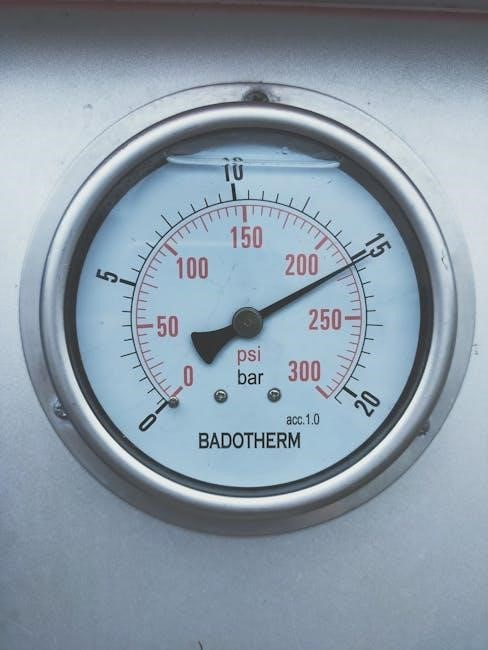
Operating Instructions
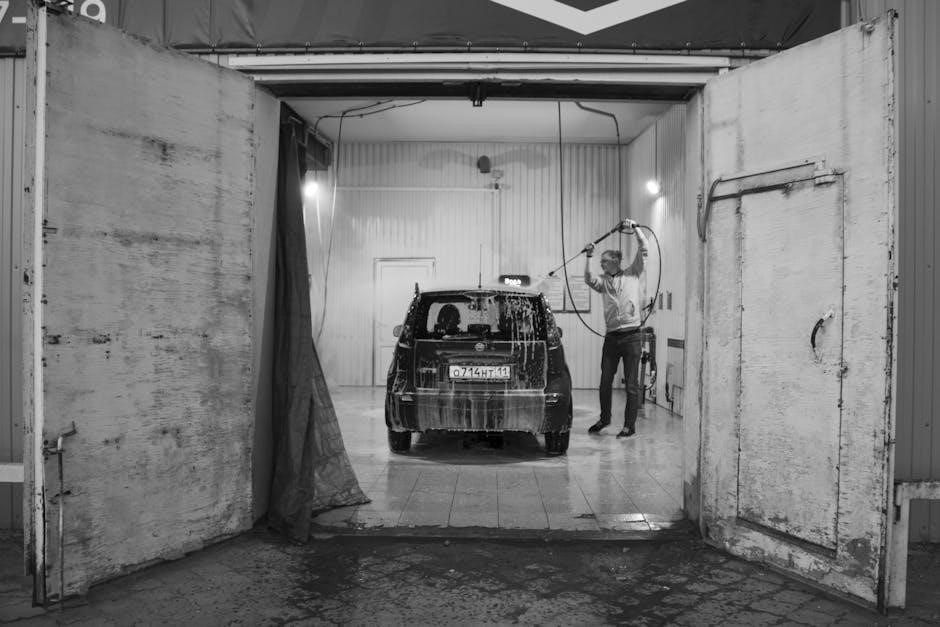
Follow these steps to start and operate your DeWalt 3400 PSI pressure washer, adjusting pressure settings and utilizing proper spraying techniques for optimal results.
Starting the Engine
Before starting, ensure the pressure washer is on a level surface with the water supply connected and fully open. Check the oil level and add if necessary, verifying the fuel tank contains fresh gasoline. Turn the fuel valve to the ‘ON’ position and slowly move the choke to the ‘START’ setting.
Gently pull the starter cord until the engine attempts to start; then, return the choke to the ‘RUN’ position and pull again with a firm, steady motion. Avoid retracting the starter cord completely. Once running, allow the engine to warm up for a few minutes before engaging the spray gun. Always disconnect the spark plug wire before performing any maintenance.
Adjusting Pressure Settings
The DeWalt 3400 PSI pressure washer features adjustable pressure settings, controlled via the unloader valve. Lowering the pressure is crucial for delicate surfaces like painted wood or vehicles. Turn the pressure adjustment knob clockwise to decrease pressure and counterclockwise to increase it.
Begin with the lowest setting and gradually increase until the desired cleaning power is achieved. Always test on an inconspicuous area first. Incorrect pressure can cause damage. Understanding nozzle selection also impacts cleaning intensity; narrower nozzles deliver higher pressure.
Proper Spraying Techniques
Effective cleaning with the DeWalt 3400 PSI pressure washer requires proper technique. Maintain a consistent distance of approximately 8-12 inches from the surface. Use sweeping motions, overlapping each pass slightly, to avoid streaking. Angle the spray slightly downwards to prevent water from getting under siding or into sensitive areas.
Avoid prolonged spraying in one spot, as this can damage the surface. Work from top to bottom, allowing gravity to assist with rinsing. Select the appropriate nozzle for the task; wider nozzles for larger areas, narrower for stubborn stains.
Shutting Down the Pressure Washer
To safely shut down your DeWalt 3400 PSI pressure washer, release the trigger on the spray gun. Turn off the engine using the power switch, allowing it to run for a short period to cool down. Disconnect the water supply from the unit to prevent backflow. Depressurize the system by squeezing the trigger again after the engine stops.
Store the pressure washer in a dry, protected area. Inspect hoses for damage before storage. Proper shutdown extends the life of your equipment and ensures safe operation next time.
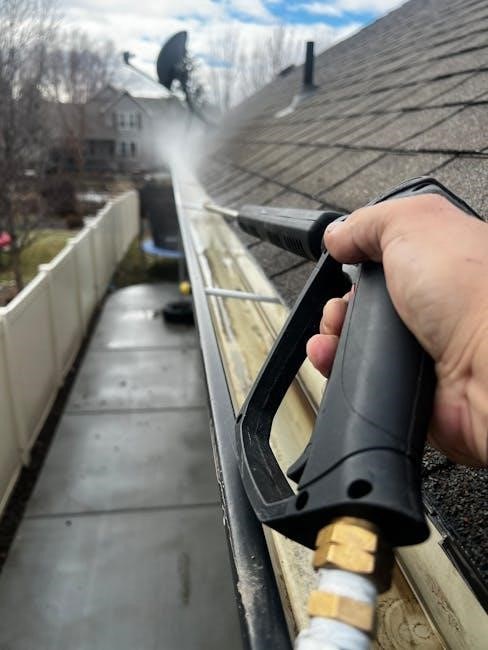
Maintenance and Care
Regular maintenance ensures optimal performance and longevity of your DeWalt 3400 PSI pressure washer; cleaning, oil changes, and filter checks are crucial.
Cleaning the Unit
Maintaining a clean pressure washer is vital for its performance and lifespan. After each use, disconnect the power source and water supply. Allow the engine to cool completely before cleaning. Use a mild detergent and a soft cloth to wipe down the exterior surfaces, removing any dirt or grime accumulation.
Pay close attention to the pump and nozzle, ensuring they are free from debris. Flush the pump with clean water after each use to prevent clogging. Inspect the high-pressure hose for any signs of damage or wear, and clean it thoroughly. Avoid using harsh chemicals or abrasive cleaners, as they can damage the unit’s components. Proper cleaning contributes to reliable operation.
Oil Change Procedures
Regular oil changes are crucial for maintaining the engine’s health. Consult the manual for the recommended oil type and change intervals. Before starting, ensure the engine is warm, but not hot. Locate the oil drain plug and place a suitable container underneath. Carefully remove the plug, allowing the old oil to drain completely.
Once drained, replace the plug and tighten it securely. Locate the oil fill cap and add the recommended amount of new oil. Check the oil level with the dipstick, ensuring it’s within the specified range. Properly dispose of the used oil at a designated recycling center;
Air Filter Maintenance
Maintaining a clean air filter is vital for optimal engine performance. Regularly inspect the air filter for dirt and debris. Remove the filter cover and carefully take out the air filter element. If the filter is only slightly dirty, gently tap it to remove loose particles. For heavily soiled filters, wash it with mild soap and water, ensuring it’s completely dry before reinstalling.
If the filter is damaged or excessively worn, replace it with a new one. Reinstall the clean or new filter, secure the cover, and ensure a proper seal. A clean air filter ensures efficient combustion and prevents engine damage.
Nozzle Inspection and Cleaning
Regularly inspect the nozzles for clogs or damage, as these can significantly affect spray patterns and cleaning performance. Remove the nozzle from the spray gun and examine the orifice for obstructions. Use a thin wire or the nozzle cleaning tool (if provided) to carefully clear any blockages.
Avoid using metal objects that could enlarge or damage the nozzle opening. Rinse the nozzle with water to ensure all debris is removed. Replace any nozzles that are cracked, worn, or cannot be adequately cleaned. Proper nozzle maintenance ensures consistent and effective cleaning.

Troubleshooting Common Issues
This section details solutions for typical problems like engine failure, low pressure, water leaks, and pump pulsation, ensuring optimal performance.
Engine Won’t Start
If the engine fails to start, first verify the fuel tank contains fresh gasoline and the fuel shut-off valve is open. Check the spark plug connection, ensuring it’s clean and securely attached. Confirm the choke is properly engaged for cold starts, and gradually disengage it as the engine warms. Inspect the air filter for obstructions, cleaning or replacing it if necessary. Low oil levels can also prevent starting; top up as needed. Ensure the safety switch is in the ‘run’ position. If problems persist, consult a qualified technician for further diagnosis and repair.
Low Pressure Output
Reduced pressure often indicates a partially clogged nozzle; remove and thoroughly clean all nozzles with a nozzle cleaning tool. Inspect the high-pressure hose for kinks, bends, or damage, replacing it if necessary. Verify the water supply is fully open and provides adequate volume. Check the pump inlet filter for debris, cleaning it regularly. Ensure the pressure regulator is set to the desired pressure level. A worn pump or internal leaks can also cause low pressure; professional servicing may be required to address these issues.
Leaking Water
Water leaks commonly occur at hose connections; ensure they are tightly secured. Inspect the high-pressure hose for cracks or damage, replacing it if found. Check the pump connections and o-rings for wear or deterioration, replacing them as needed. Examine the water inlet connection to the pump for tightness and proper sealing. A leaking pump may indicate internal damage, requiring professional repair. Ensure all spray nozzles are properly installed and not damaged. Regularly inspect and tighten all fittings to prevent leaks during operation.
Pump Pulsation
Pump pulsation, or an uneven spray, can indicate air in the pump system; disconnect the high-pressure hose and trigger the gun to bleed air. Check the water supply for adequate volume and consistent pressure, as insufficient water causes pulsation. Inspect the inlet filter for clogs and clean it thoroughly. A worn or damaged pump unloader valve can also cause this issue, requiring replacement. Ensure the high-pressure hose isn’t kinked or restricted. Regular maintenance and proper water supply are crucial for smooth operation.

Technical Specifications
The DeWalt 3400 PSI pressure washer features a robust engine, a high-pressure pump, and specific dimensions and weight details for optimal performance.
Engine Details
The DeWalt 3400 PSI pressure washer is powered by a reliable gas engine, designed for delivering substantial cleaning power. Typically, these models utilize a Briggs & Stratton engine, known for its durability and performance in outdoor power equipment.
Specific engine displacement often falls around 208cc, providing ample torque for demanding cleaning tasks. The engine is air-cooled, ensuring consistent operation even during extended use. Fuel capacity is generally around 0.8 quarts, allowing for prolonged runtimes between refueling.
It’s crucial to use the recommended oil type and maintain proper oil levels, as detailed in the owner’s manual, to ensure optimal engine longevity and performance.
Pump Specifications
The DeWalt 3400 PSI pressure washer features a robust axial cam pump, engineered for high-pressure cleaning applications. This pump delivers a maximum pressure of 3400 PSI, effectively removing stubborn dirt and grime.
Water flow rate typically measures 2.5 gallons per minute (GPM), balancing cleaning power with water conservation. The pump incorporates a thermal relief valve, preventing overheating during prolonged operation.
It’s constructed with durable materials, including a forged steel crankshaft, to withstand demanding use. Regular inspection and maintenance, as outlined in the manual, are vital for maintaining pump efficiency and extending its lifespan.
Dimensions and Weight
The DeWalt 3400 PSI pressure washer is designed for portability and convenient storage, despite its powerful capabilities. Overall dimensions typically measure around 38.6 inches in length, 18.5 inches in width, and 33.5 inches in height, offering a relatively compact footprint.
The unit’s dry weight is approximately 68 pounds, making it manageable for most users to move around a job site. However, caution should be exercised when lifting or transporting the washer, especially on uneven terrain.
These dimensions and weight contribute to its versatility, allowing for use in various residential and commercial settings.
Warranty Information
DeWalt offers a warranty covering manufacturing defects on the 3400 PSI pressure washer; review the manual for specific coverage details and claim procedures.
Coverage Details
DeWalt’s warranty for the 3400 PSI pressure washer typically covers defects in materials and workmanship for a specified period from the original purchase date. This generally includes the engine and pump, but the duration varies – often a one-year warranty on the entire unit, with potentially longer coverage for the engine itself.
The warranty safeguards against failures occurring during normal residential or professional use, as outlined in the owner’s manual. It’s crucial to register your product promptly after purchase to ensure seamless claim processing. Keep your proof of purchase readily available, as it’s required for any warranty service requests.
Claim Procedures
To initiate a warranty claim for your DeWalt 3400 PSI pressure washer, first contact DeWalt’s customer service via phone or their official website. You’ll need your model number, serial number, and proof of purchase. Be prepared to describe the defect in detail.
DeWalt may request you to ship the defective part or the entire unit to an authorized service center for inspection. All shipping costs are typically the responsibility of the customer, unless the claim is approved. Upon verification, DeWalt will either repair or replace the defective component, at their discretion.
Limitations and Exclusions
The DeWalt warranty for the 3400 PSI pressure washer doesn’t cover damage resulting from misuse, abuse, or improper maintenance. Normal wear and tear, such as worn seals or nozzles, are also excluded. Modifications or repairs performed by unauthorized service centers void the warranty.
Furthermore, the warranty doesn’t extend to issues caused by using incorrect detergents, freezing temperatures, or failure to follow the owner’s manual instructions. Incidental or consequential damages are not covered under this warranty agreement, limiting the scope of the claim.

Downloading the PDF Manual
The DeWalt 3400 PSI pressure washer manual is readily available as a PDF download from the official DeWalt website and various online databases.
Official DeWalt Website
Accessing the official DeWalt website is the most reliable method for obtaining the DeWalt 3400 PSI pressure washer owner’s manual in PDF format. Navigate to DeWalt’s support section and utilize the model number search function (DXPW3400PRNB-S) to locate your specific pressure washer.
DeWalt consistently provides the latest versions of their manuals, ensuring you have access to the most up-to-date safety information, operating instructions, and troubleshooting guides. Downloading directly from the source guarantees authenticity and avoids potentially outdated or inaccurate information found on third-party sites. The website also often includes helpful videos and FAQs.
Third-Party Manual Databases
Several online databases compile user manuals for various products, including the DeWalt 3400 PSI pressure washer. These platforms can be a convenient alternative if the official DeWalt website experiences issues or if you prefer a different search interface. However, exercise caution when using these sources.
Verify the manual’s authenticity and ensure it corresponds to your specific model number (DXPW3400PRNB-S). Third-party sites may host outdated or inaccurate versions. Always cross-reference information with the official DeWalt documentation whenever possible to guarantee safe and correct operation of your pressure washer.
Ensuring You Have the Latest Version
Manufacturers frequently update manuals to reflect design changes, safety improvements, or clarified instructions. Downloading the most recent version of the DeWalt 3400 PSI pressure washer manual is crucial for optimal performance and safety. Check the official DeWalt website regularly for updates, even if you already possess a copy.
Pay attention to the publication date listed on the manual. Using an outdated manual could lead to incorrect operation, potential damage to the unit, or even safety hazards. Prioritize the latest documentation to ensure you’re following the most current guidelines.